Within the Royal Norfolk show the RNAA show their admiration for our local female farmers; this year the united nations declared 2026 the year of women in agriculture hence it be vital that within the two day event there be some recognition of that. My objective on day one of the Royal Norfolk show was to observe and capture the women in agriculture in and around the show.
In my particular section ( discovery lounge/zone) the main aspects were educational pop-ups and small activities to educate people on the opportunities out there to do with STEM and agriculture, in the lounge specifically i found the small women in agriculture stand and some other trusts that were with the RNAA. in other parts of the zone there was educational stands on mustard and mint, the show ambassadors for this section i noticed were all female! Im not sure if this was intentional but i liked that while the RNAA were doing this female farmer project, they also had an all women team educating people on these two things.
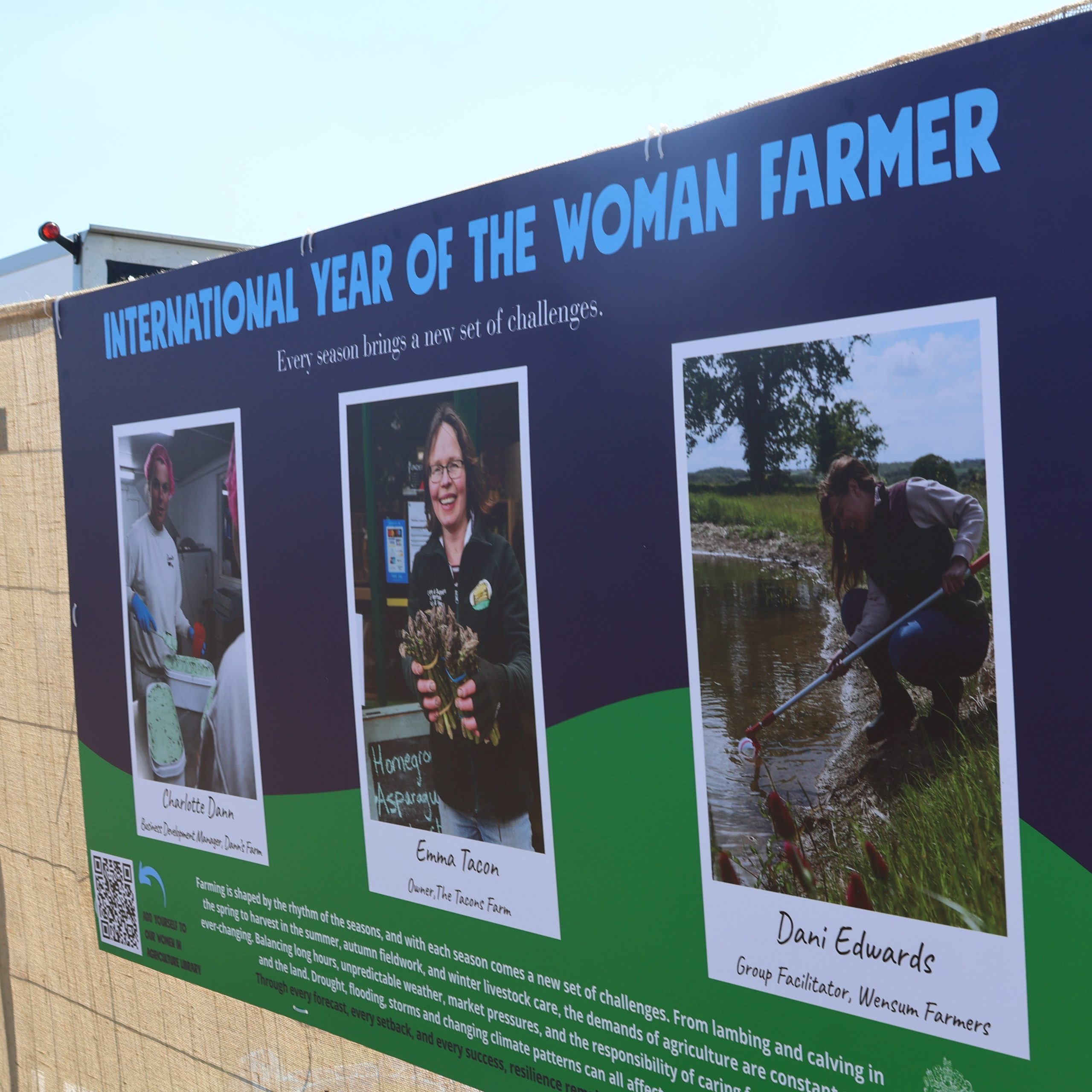
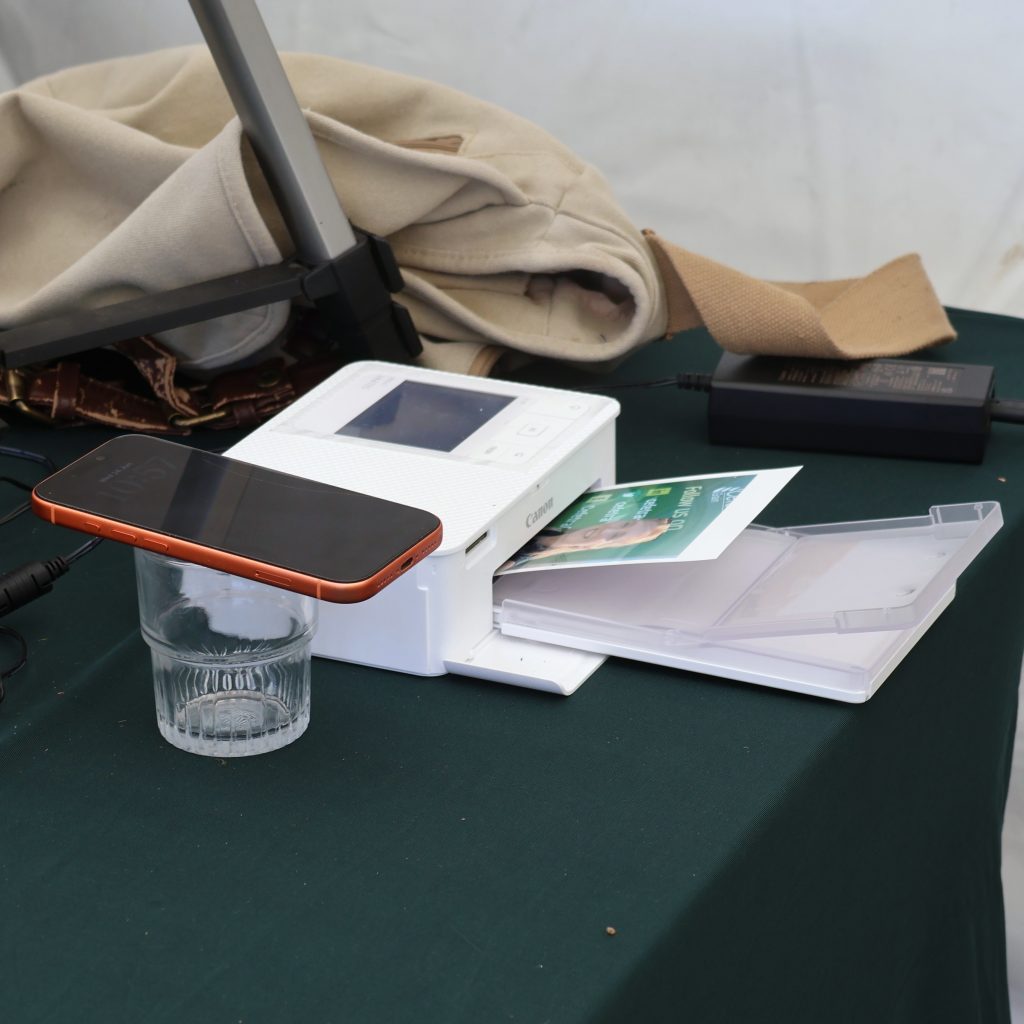
My first notable activity i located in the discovery trust lounge , the interactive poster board is set out to showcase a wide variety of women who work in agriculture in Norfolk and bring appreciation to the work they do for our community. This works by female guests of the royal norfolk show , who work in agriculture, having their photo taken or uploading a photo of them selves to be displayed. Throughout the two day event, the board will grow with photos of women for everyone to see and acknowledge for their work creating a beautiful collage of women making a difference in their industry. When looking at the board myself i had a small conversation with the photographer and as we spoke she actually was printing another photograph of a female farmers involved to add; this was pretty early in the day and already there were so many women already on the board showing me , as someone unfamiliar with the agricultural industry, the large amount of women doing their amazing part in the Norfolk community. I feel this is heavily inspirational especially to young girls looking to be farmers in the future and actually later in the day when passing i saw that a school were sitting in the tent around that area. I feel this moment would have been great for both the young girls and boys to see what women are doing for agriculture.
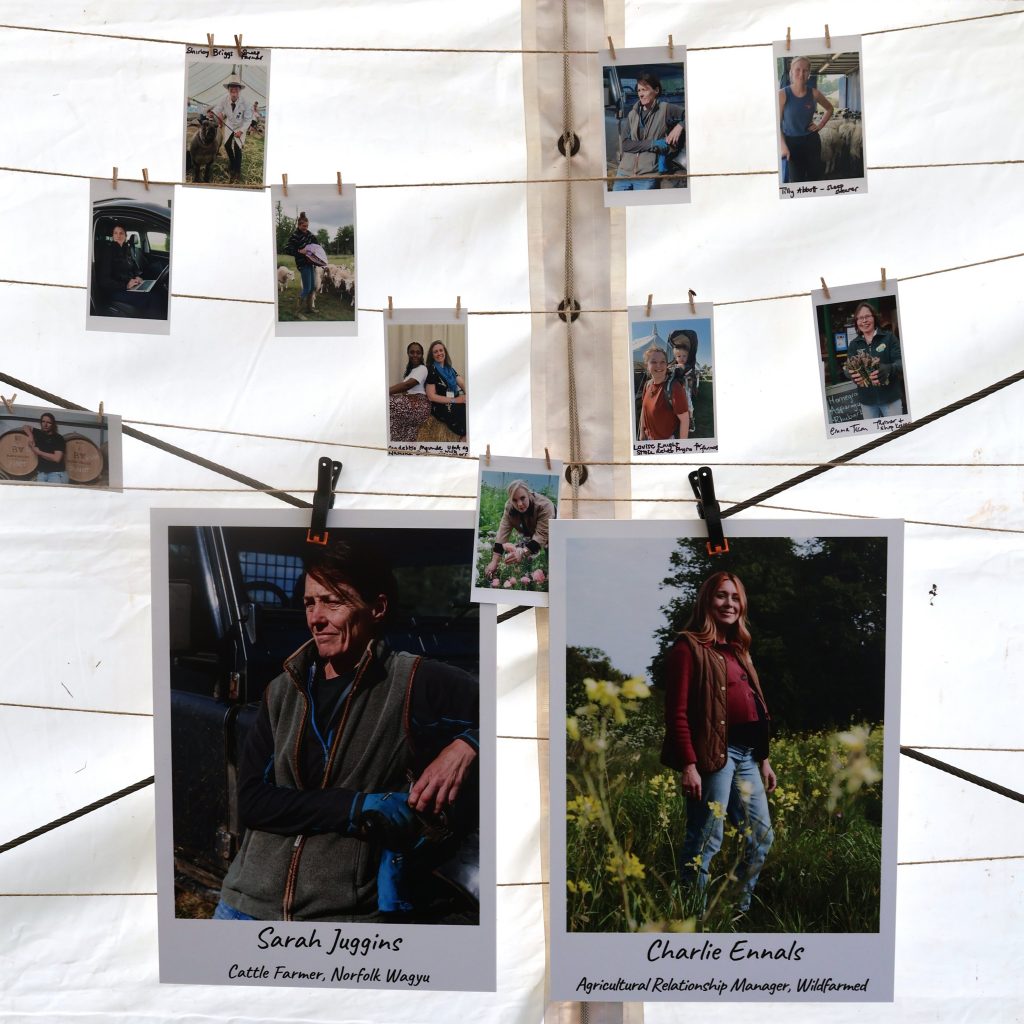
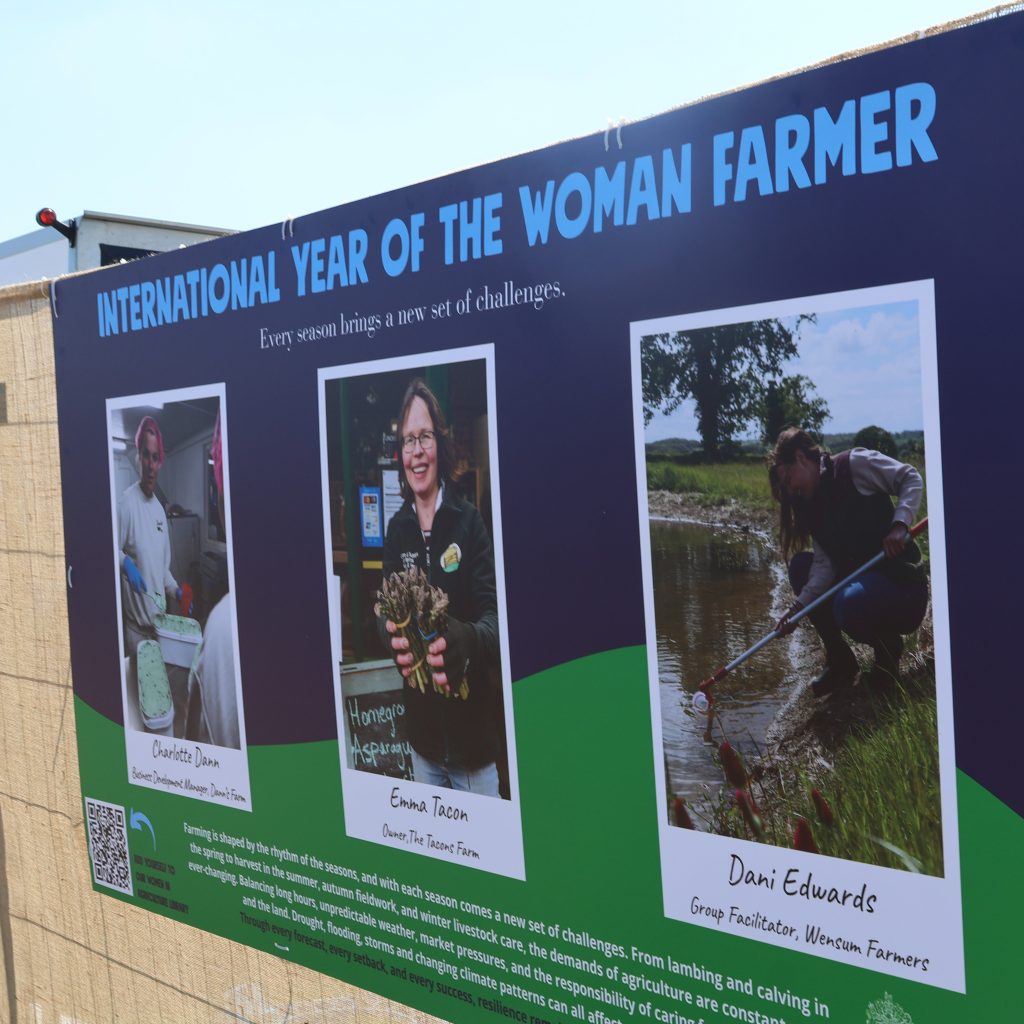
Around midday I was again passing the tent and noticed a crowd, it turns out Princess Anne was visiting and was looking at the posterboard, unfortunately when I went back to the tent a couple times to ask the photographer who i had previously met about the interaction , she wasn’t there so I wasn’t able to capture what she thought of it. Its widely known that Princess Anne is a hands-on farmer, operating her own working farm so her visit as a woman in agriculture is great not only for the RNAA who have put together this small project, having her royal approval but also for any young watchers who saw the interaction, showing them that farming is and should be a diverse community.
Around the show there are a lot of livestock shows and competitions which have a noticeable amount of female farmers involved, in an observation of one of the sheep competitions, majority of the showcasing farmers were female of a wide range of ages, which was admirable to watch as we can see agricultural culture and traditions have been passed down to the younger generations. When watching the small show myself , I enjoyed watching one of the female farmers taking full control when a sheep decided not to cooperate, in that small moment I saw a women who was confident in her role and confident in her passion so much that in a public show with lots of people watching she was able to calmly take back control of the situation and carry on like it never happened.
Another livestock show I observed was one of the horse showjumping slots, this included a number of people riding around the pen with their horses and even doing a few jumps, again about half of the riders were girls, this does lean into my previous point about equine being a female dominated community; most of them being younger. I captured a few shots of these girls riding around and watched as they did so. After some research into equestrians, I learnt that they must have a lot of physical strength to do the jumps they were doing to keeps the posture on their saddle, these girls I watched highly demonstrated this and you could see it in their concentration when approaching the jump. Horses like other animals are unpredictable and much like the sheep, one horse with a female rider wasn’t behaving, the young girl on its back was very calm and managed to calm the horse down. I think as you watch young girls like this one controlling such potentially dangerous animals like a horse, you gain a lot of respect and admiration due to the fact that in that moment there’s no predicting what the animal will do and it could result in injury, so as a young girl watching another young girl , having that physical strength and stamina to control such a large animal is very impressive.
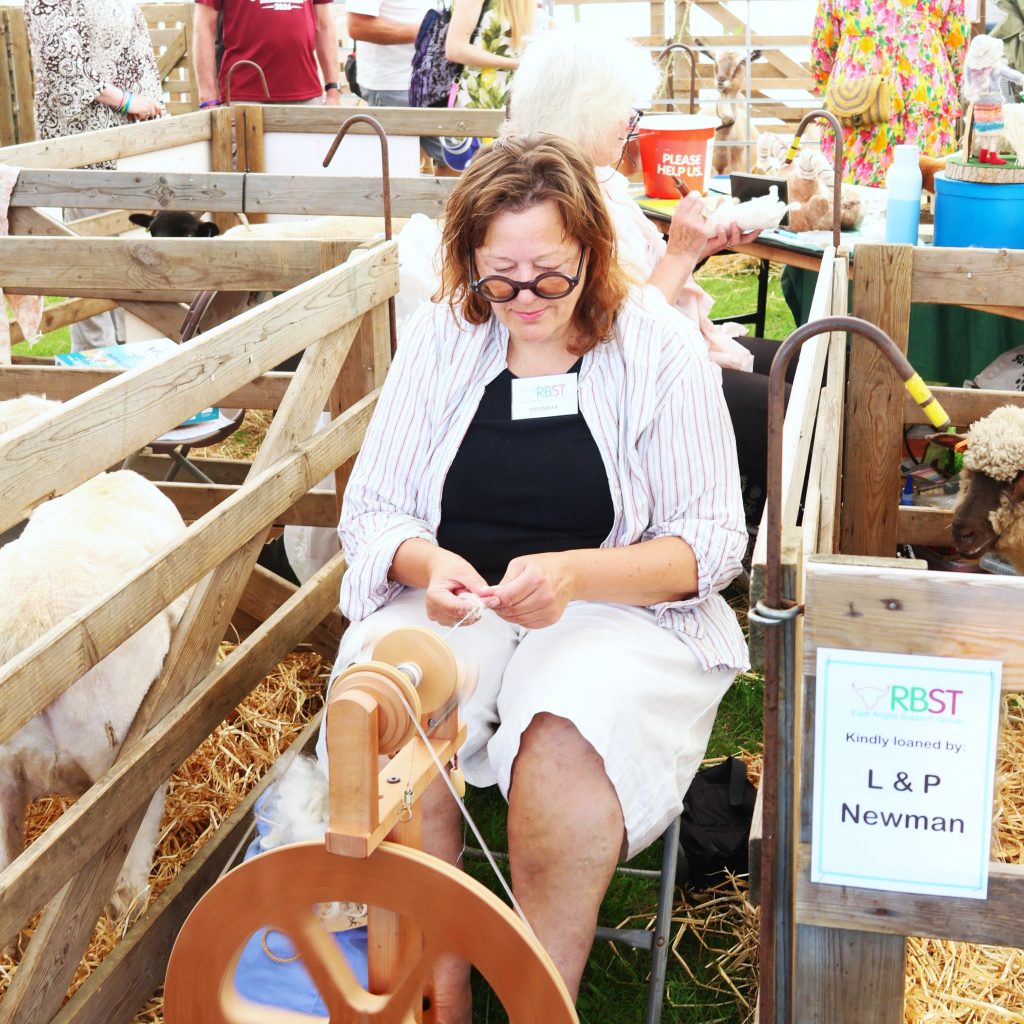
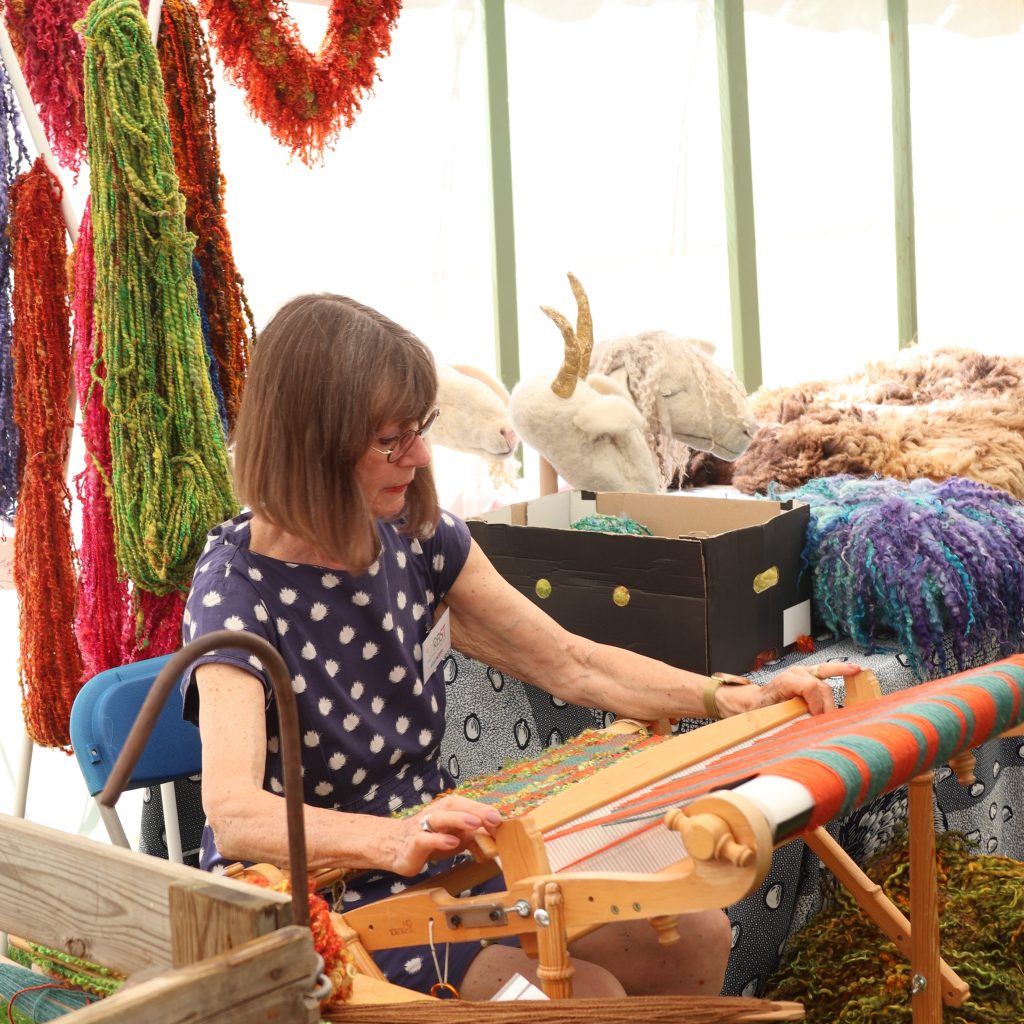
another notable example of women in agriculture was in a small tent where I found a lot of women spinning fleece live with the RBST (rare breeds survival trust),it was very interesting to watch these women creating material that we use daily on the spot, the craftsman ship I saw was very beautiful. One woman in particular had a small table of absolutely amazing figure like creations she had made from the wool on sheep. I was amazed by the intricate details on them and how she had made them purely from wool. I think this stood out to me as a beautiful creation from a woman in agriculture because of its sustainability, I learnt that fleece can be used in the wild for a lot of beneficial things like restoring peat bogs, and from that I learnt that these figures were a great way of creating art sustainably , not harming the environment in which the farming community is built on.
In the discovery zone I spoke to two female agriculture students from Easton college, i asked whether there were a lot of females in their course to which they responded that in their class , no there is mainly male students. A key quote that stuck out to me from one of the girls was ‘ there’s more girls in the ‘feminine’ courses like equine and animal care’ this stuck out to me because it highlights the major gender gap in agriculture, while yes we are seeing an increase in female farmers being recognised , there still is a very unbalanced ratio, even in education. I think this is quite shocking because of my experience through this agricultural show, where I have seen endless amounts of women and young girls involved and attending the show.
Another small thing I was so proud to see was in the sheep pens, there was one particular one that stood out and that was a little girl called Edith, while she wasn’t there for me to speak to I saw her banner with a few photos of her and her sheep. I love that again young females, in this case a young child, are involved with raising livestock and are being brought into the community from such a young age to learn this culture that is so vital to rural community.
Throughout my day I had a great time looking around at the women in agriculture , I learned a lot about agriculture itself as someone unfamiliar but then looking deeper into the gender aspect made me have a new appreciation for it. Overall I think the poster board project is a beautiful way of highlighting the female work in the industry because of the live interaction of attending women placing themselves onto the board.
Blog piece and photography by Jess Lawrence of City College Norwich